 French
 English
 German

Needs Assessment Report for Curriculum Review of MSc Program in Agroforestry at Bahir Dar University
BDU APPEAR
23 Dec, 2025
Needs Assessment Report for Curriculum Review of MSc Program in Agroforestry at Bahir Dar University
Introduction
This report presents the findings from the comprehensive needs assessment of the MSc program in Agroforestry at Bahir Dar University. The assessment was methodically conducted using data collected through questionnaires distributed to a diverse group of stakeholders. These stakeholders included current students, alumni, department members, employers, and other relevant parties who have a consigned interest in the program's outcomes and effectiveness.We distributed our digital questionnaires to approximately 70 potential respondents and 37 provided their feedback in time. The primary objective of this analysis was to synthesize the feedback gathered from these respondents to obtain a holistic view of the program's performance. The assessment focused on several critical areas that are essential for the success and continuous improvement of the MSc program in Agroforestry. These areas included the curriculum content, teaching methods, research support, career preparation, and the overall strengths and weaknesses of the program.
Curriculum content evaluation included an examination of the relevance, comprehensiveness, and up-to-dateness of the curriculum. Practical teaching was another key area of focus, as it is crucial for the development of student's practical skills and their ability to contribute to the field of agroforestry. This involved evaluating the availability and quality of field or lab resources, guidance from instructors, and opportunities for students to engage in meaningful practical lessons. The overall strengths and weaknesses of the program were identified by synthesizing feedback from all stakeholders to highlight areas where the program excels and areas where improvements are needed.
Respondent Demographics
The demographics of respondents indicate that instructors represent the majority (30%), followed by employers (19%) and then current students (16%) and, alumni (11%) (Figure 1). The familiarity with the program is notable, with 30% of respondents involved in agroforestry and related fields such as forestry (27%) and environmental science (24%). This alignment suggests that the program is attracting individuals with a genuine interest in and commitment to agroforestry practices.
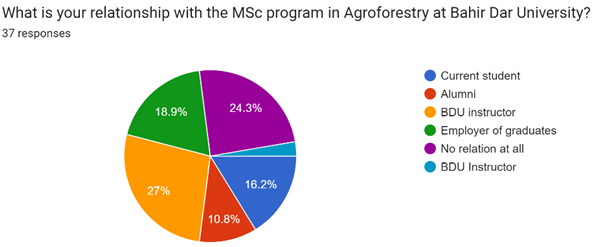
Figure 1. Demography of the respondents
Relevance and Updates
About 60% of respondents find the curriculum highly relevant to contemporary practices, while 35% believe it is moderately relevant (Figure 2a). This indicates that the curriculum remains important and is aligned with evolving agroforestry practices. The effectiveness of the curriculum in addressing climate-resilient practices is acknowledged by 76% of respondents (Figure 2b), indicating a positive perception of this critical aspect of agroforestry education.

Figure 2. Relevance of current courses in the program (a) and effectiveness of the curriculum in covering topics (b).
Practical Applications
Integration of practical learning is a critical area for improvement. About 57% of the respondents expressed that practical applications need improvement (Figure 3). This gap suggests that increased emphasis on hands-on experiences could significantly benefit student learning.
Figure 3. Integration of practical applications into the current courses
Responses indicate that while 33% of the respondents report that the curriculum addresses socio-economic aspects very well, 31% feel it needs improvement (Figure 4). This suggests a potential area for curriculum development, particularly in terms of integrating community involvement and rural development themes. As can be seen in Table 5, the majority of respondents (78%) suggest that more emphasis should be given to Agroforestry for Climate Change courses.
Figure 4. The curriculum addresses the socio-economic aspects of agroforestry.
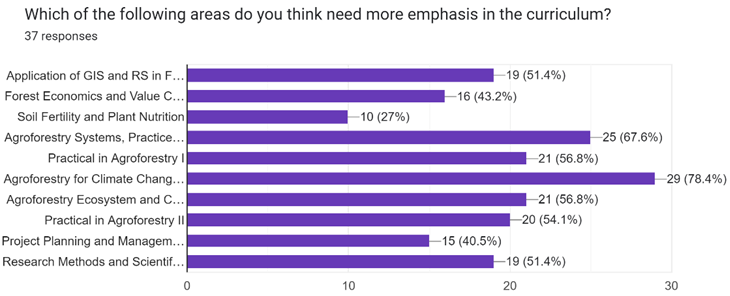
Figure 5. Courses need more emphasis in the new curriculum
Teaching and Learning Methods
Satisfaction with teaching methods is generally favorable, with over 70% of the respondents expressing that they are satisfied or very satisfied (Figure 6). However, 5% report dissatisfaction, pointing to the need for ongoing evaluation and enhancement of pedagogical approaches.The use of interactive methods is reported as moderate, with 80% of respondents indicating that these methods are used sometimes or frequently. Enhancing interactive learning could foster deeper engagement among students.
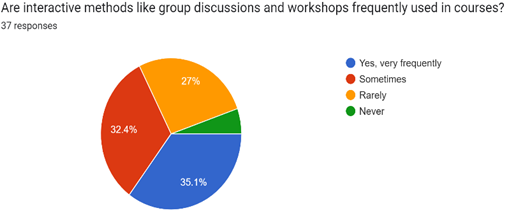
Figure 6. Level of satisfaction in teaching methods and frequency in the use of interactive teaching methods
While 54% of respondents find online resources effective, a significant proportion of respondents (32%) find them ineffective, and 11% have not utilized these resources (Figure 7). This indicates the need for better integration and promotion of digital tools in the learning process.
Figure 7. Effectiveness of online learning resources
Research Support
The support provided for research activities is viewed positively, with 81% rating it as good or excellent (Figure 8). This highlights the importance of providing comprehensive guidance to facilitate students' research endeavors.
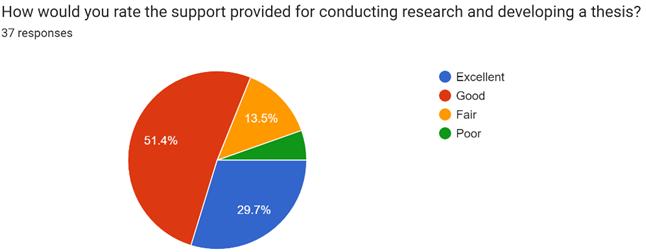
Figure 8. Support provided for thesis research
Encouragement for innovative research is strong, with 50% of respondents affirming that students are indeed encouraged to explore novel topics (Figure 9). This support for creativity is crucial for advancing the field of agroforestry. About 51% of the respondents said they have access to laboratory and field sites.
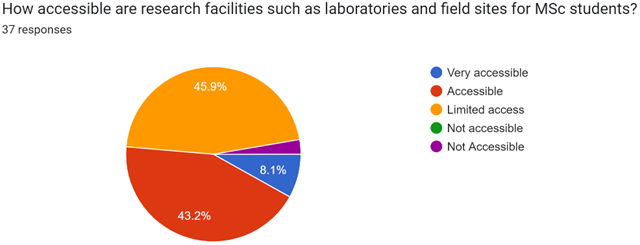
Figure 9. Accessible research facilities for MSc students
The effectiveness of the program in preparing students for careers is also rated positively, with 73% of the respondents indicating that it prepares them well or very well (Figure 10). This reflects the program’s relevance to the job market and its alignment with industry needs.
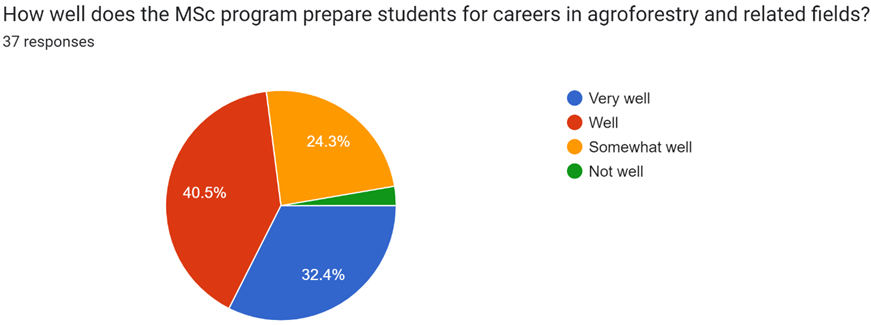
Figure 10. Career opportunities for graduates in agroforestry.
Satisfaction with skills development aspect of the program is high, but there is room for improvement in providing more opportunities for internships and industry collaborations. Currently, 30% indicate that such opportunities are limited (Figure 11).
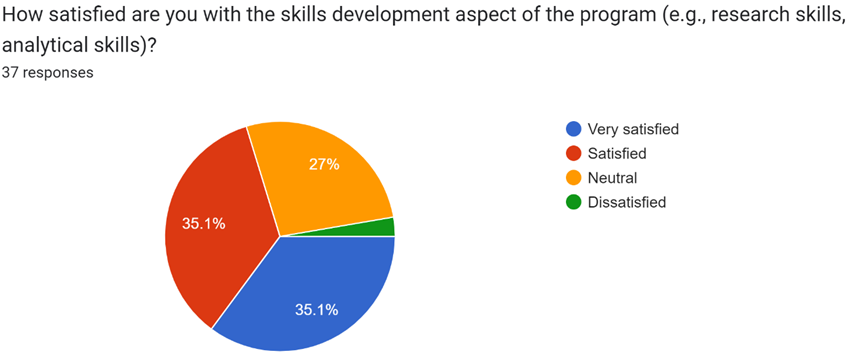
Figure 11. Skills development satisfaction by students
Strengths of the Program
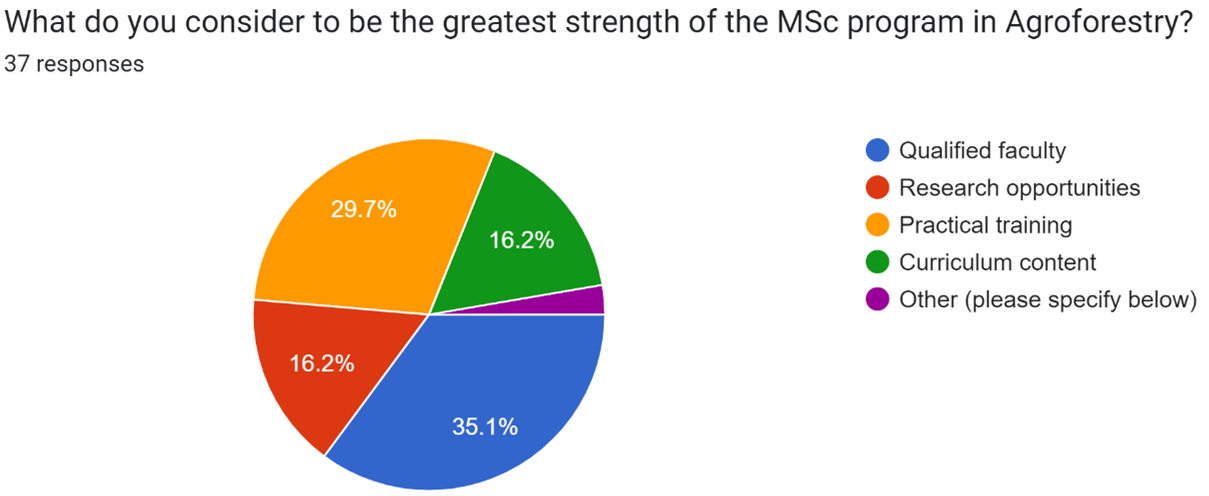
The program's strengths lie primarily in its qualified staff members (35%), practical training (30%), and research opportunities (16%) (Figure 12). The presence of knowledgeable department members is a significant advantage contributing to the quality of education.
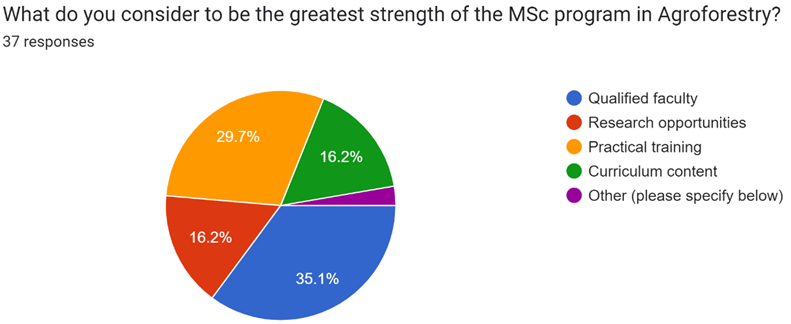
Figure 12. The greatest strength of the program
The most significant area for improvement is field-based research (76%); it is followed by research facilities (16%) (Figure 13). This emphasizes the necessity for ongoing program development to ensure relevance and effectiveness.
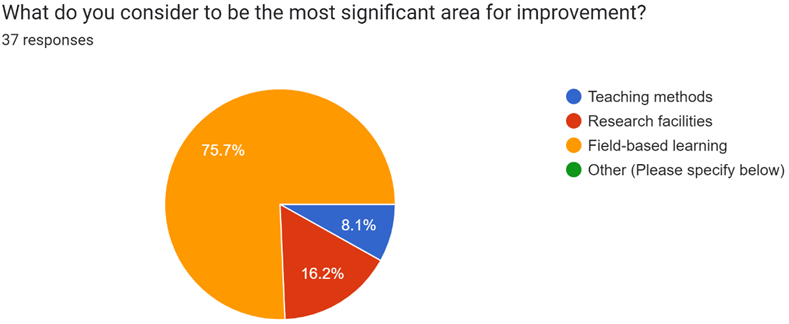
Figure 13. Areas of improvement in the curriculum.
The overall quality of the program is rated positively, with 73% of respondents rating it as good or excellent (Figure 14). This suggests a strong foundation, but it also indicates areas where enhancements can be made.
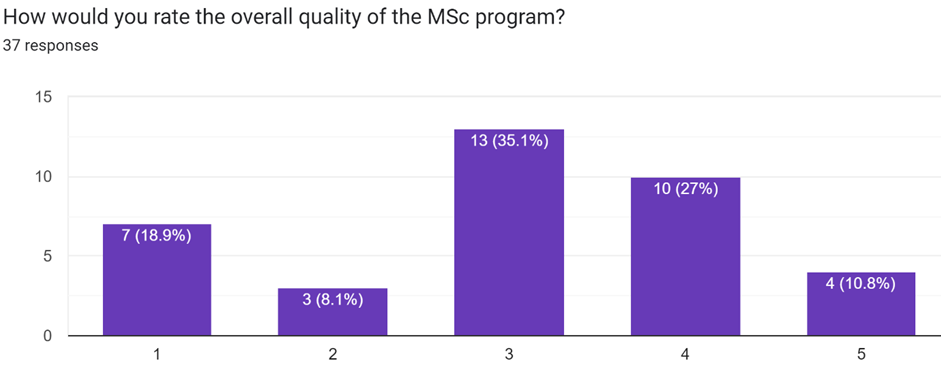
Figure 14. The overall quality of the MSc program.
More than 97% of respondents recommend the program to continue, indicating a demand for experts in the field of agroforestry. The MSc program in Agroforestry at Bahir Dar University is well-regarded, particularly for its relevance to contemporary practices and qualified faculty. However, significant areas for improvement exist, particularly in curriculum updates, practical training integration, and industry collaboration.